I Finally Quit Keeping Score With Strangers on the Internet
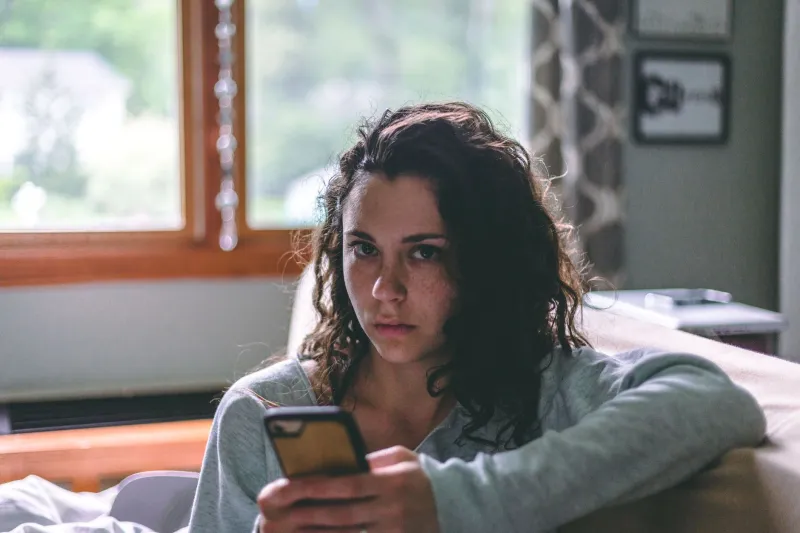
There's a specific kind of exhaustion that comes from scrolling. Not the sleepy kind — the hollow kind. The kind where you put your phone down and feel vaguely worse about your apartment, your career, your skin, your life, without being able to pinpoint exactly why.
I lived in that feeling for a long time. And the wild thing? I didn't even realize I was doing it.
When Comparison Became My Default Setting
It crept in quietly, the way most bad habits do. A friend got engaged and I did a mental inventory of my own relationship. A college acquaintance posted about her promotion and suddenly my job felt smaller. Someone I followed — a stranger, really — shared a kitchen renovation and I spent the next forty minutes on Zillow calculating what I couldn't afford.
None of these reactions felt dramatic in the moment. They felt normal. And that's kind of the point, right? We've been comparing ourselves to others since we were kids lining up for the water fountain in elementary school. The difference now is that the lineup never ends. It runs 24 hours a day, curated and filtered and served directly to the palm of your hand.
Psychologists actually have a name for the instinct behind all this: social comparison theory. Coined back in the 1950s by Leon Festinger, the idea is that humans naturally evaluate themselves by measuring against other people. It's not a flaw — it's wiring. The problem is that our brains weren't exactly built to process the sheer volume of comparison opportunities that modern life throws at us. We evolved to exist in small communities. Not to scroll past the highlight reels of ten thousand strangers before we've even had coffee.
The Moments I Fell Hardest
I'll be honest with you. My worst comparison spirals weren't triggered by celebrities or influencers with millions of followers. They were triggered by people I actually knew.
When my best friend bought a house at 28, I was genuinely happy for her — and simultaneously devastated for myself. I sat in my rental apartment doing math I didn't have the numbers for, feeling like I'd somehow fallen behind on a race I never signed up to run. I didn't want that house. I didn't even want a house at that point in my life. But her milestone made me feel like I was missing something, and my brain filled in the blank with panic.
That's the sneaky thing about comparison. It doesn't care whether you actually want what the other person has. It just registers the gap and sounds the alarm.
Social media made it so much worse because it stripped away all the context. I'd see someone's perfectly styled living room and not see the debt behind it. I'd see the engagement announcement and not know about the years of hard work, therapy, or luck that got them there. I was comparing my full, complicated, behind-the-scenes life to everyone else's highlight reel — and somehow expecting myself to measure up.
The Shift That Actually Helped
I didn't fix this with a digital detox or a journaling prompt, though both of those things have their place. The shift started when I got genuinely curious about whose measuring stick I was using.
When I felt behind, I started asking: behind what, exactly? Behind a timeline I chose? Or one I absorbed from somewhere — a parent's expectation, a cultural script, a comment section's definition of success?
Most of the time, it was the latter. I was failing to meet standards I never consciously agreed to. And once I saw that clearly, the comparison lost a lot of its power.
I also started practicing something I can only describe as comparison redirection. Whenever I caught myself measuring, I'd pause and ask what that feeling was actually pointing to. Jealousy, it turns out, is a surprisingly useful compass. If someone's creative work made me feel a sting of envy, that was information — it meant I wanted to be creating more. If a friend's solo travel photos made me restless, it meant I was craving adventure, not her specific trip. The comparison was just the messenger. The real message was about me.
Practical Stuff That Actually Moved the Needle
Beyond the mindset work, a few concrete changes genuinely helped:
Curating ruthlessly — and honestly. I've written before about unfollowing accounts that didn't serve me, but this went deeper than that. I had to get real about why I was following certain people. Was it genuine interest? Or was it a weird compulsion to keep tabs on someone whose life made me feel inadequate? The second category got the unfollow, no guilt attached.
Defining my own metrics. I sat down and wrote out what a good year actually looked like for me — not for a hypothetical version of myself trying to impress someone. The list was smaller and stranger than I expected. More slow mornings. More finished creative projects. More laughing until my face hurt. None of it was Instagrammable. All of it was mine.
Saying it out loud. There is something genuinely deflating about telling a trusted friend, "I saw so-and-so's news and I feel weirdly bad about my own life right now." Not because it's embarrassing — it is, a little — but because saying it out loud makes it smaller. It stops living rent-free in your head and becomes a thing you can actually look at.
Noticing what comparison costs you. Every minute I spent spiraling about someone else's engagement ring or career move was a minute I wasn't putting into my own life. That trade-off became harder to ignore once I named it.
What Living on Your Own Terms Actually Feels Like
I won't pretend I'm cured. I still catch myself doing the mental math sometimes — still feel the flicker of that hollow, scrolling feeling. But it passes faster now. I recognize it for what it is: noise, not signal.
The quieter truth I've landed on is this: contentment isn't the absence of ambition. You can want more for yourself and still feel genuinely okay about where you are right now. Those two things can coexist. What they can't coexist with is a constant, low-grade belief that someone else's life is the one you were supposed to have.
Your life — the real one, the messy one, the one happening right now — doesn't need a filter to be worth something. It just needs your full attention. And you can't give it that while you're busy keeping score.