I Fell for the 'Investment Piece' Sales Pitch — Here's What It Actually Cost Me
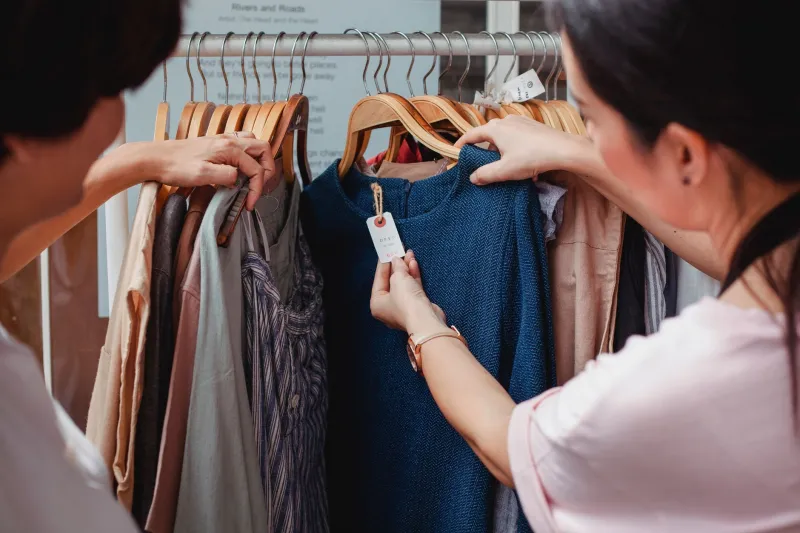
There's a specific feeling I remember from standing in a Nordstrom fitting room a few years back, holding a camel-colored wool coat with a price tag that made my stomach drop. The salesperson — lovely, genuinely helpful — leaned against the doorframe and said the words I'd been conditioned to hear my whole adult life: "It's a real investment piece. You'll have it forever."
Reader, I bought the coat.
And here's the thing — I don't entirely regret it. But I do regret the reasoning I used to justify it. Because somewhere between "you'll have it forever" and the reality of my actual life, closet, and spending habits, I had completely stopped thinking critically about what those two words were actually doing to my wallet.
What "Investment Piece" Really Means (Spoiler: It's Marketing)
Let's call it what it is. The term "investment piece" is one of fashion's most elegant pieces of spin. A true investment — like, the financial kind — is something that grows in value over time. A savings bond. A mutual fund. Real estate (on a good day). A vintage Hermès Birkin, maybe, if you've got $30,000 lying around and a 10-year timeline.
That $280 linen blazer from a direct-to-consumer brand with beautiful photography and a sustainability manifesto? Not an investment. It's a purchase. And there's nothing wrong with purchases — but we should be honest about what they are.
The fashion industry figured out a long time ago that framing expensive items as responsible spending makes consumers feel smart rather than indulgent. It takes the guilt out of the transaction and replaces it with something that feels almost virtuous. You're not splurging. You're curating. You're investing in quality. You're thinking long-term.
Except most of us aren't. And the brands know that.
The Cost-Per-Wear Math Nobody Actually Does
Okay, so the cost-per-wear argument is real — in theory. If you spend $300 on a pair of jeans and wear them 150 times, that's $2 per wear. If you spend $30 on a pair and wear them 10 times before they fall apart, that's also $3 per wear. Math checks out.
But here's what that calculation conveniently leaves out: you have to actually wear the thing.
I did a genuinely uncomfortable audit of my closet last spring. I pulled out every item I'd purchased with the "investment" justification — the structured handbag, the cashmere sweater, the leather ankle boots, the aforementioned coat — and I tracked how often I'd actually reached for them in the past year. The results were not flattering. Several of those "forever pieces" had a cost-per-wear hovering somewhere around $40 to $60 per use. Meanwhile, a $35 ribbed tank from Target had basically become a daily uniform staple.
The math only works if your actual lifestyle matches the aspirational lifestyle you're shopping for.
The Environmental Angle Is More Complicated Than You Think
One argument I genuinely respect is the environmental case for buying fewer, better things. Fast fashion is a real problem — the waste, the labor conditions, the synthetic fabrics that shed microplastics into waterways. I'm not here to dismiss any of that.
But "investment piece" culture has its own environmental blind spots. High-end fashion has a significant carbon footprint too. Luxury goods are often shipped internationally multiple times throughout production. And when a $500 blouse goes unworn because it doesn't actually fit your life, it's not more sustainable than a $50 one — it's just more expensive waste.
Sustainability isn't about price point. It's about use. The most eco-friendly item in your closet is the one you actually wear, whether it cost $15 or $150.
So What Is Worth Spending More On?
I want to be clear: I'm not saying never spend money on clothes. I'm saying spend money thoughtfully, and stop letting marketing language make that decision for you. Here's the framework I've landed on after a lot of trial, error, and honest reflection.
Wear it in your head first. Before buying anything over $100, I mentally run through a week of my actual life — not my Pinterest board life. Would this item work on a Tuesday when I'm running errands, on a Wednesday work call, at a Saturday dinner? If I can't picture it in rotation at least a few times a week, it stays on the rack.
Fit is non-negotiable. A $400 blazer that almost fits will never be worn. A $60 blazer that fits perfectly will get used constantly. Tailoring exists and is often worth the extra $20 to $30.
Know your actual lifestyle. I live in a mid-sized city, work mostly from home, and my "event" calendar is pretty casual. I do not need investment-level occasion wear. You might. Know yourself.
Basics vs. trend pieces deserve different budgets. A white cotton tee is something I'll wear hundreds of times — spending a little more for quality fabric makes sense there. A very specific trending silhouette? I'd rather spend less, enjoy it for a season, and move on without the financial hangover.
Building a Closet Without the Guilt Trip
What I've been working toward — slowly, imperfectly — is a wardrobe that reflects my real life instead of a curated version of it. Some pieces cost more. Some cost less. The through-line is that I actually wear them.
I've stopped reading "investment piece" as a green light to overspend, and I've stopped reading it as a moral failing if I choose the more affordable option. A $25 bodysuit that I reach for twice a week is doing more work for me than a $200 one sitting in tissue paper because it feels too nice to wear casually.
The fashion industry is genuinely talented at making us feel like we're one perfect purchase away from a more elevated, put-together version of ourselves. And sometimes a great piece really does change how you carry yourself — I believe that. But that transformation doesn't have a minimum price tag.
Your closet should work for your life. Not the other way around.
Have you ever done a cost-per-wear audit? I'd love to hear what surprised you — drop it in the comments or find me on Instagram.